The erasure of deep work
Ten minutes. That’s how long it took, in a study discussed on Possible this week, for AI help to make people worse at pushing through hard problems on their own.
The paper is AI Assistance Reduces Persistence and Hurts Independent Performance, by Grace Liu, Brian Christian and colleagues. Across three randomised trials and 1,222 people, participants worked through fraction problems or SAT-style reading questions, some with ChatGPT and some without. With the AI, people did better. Then it was taken away for the last few questions, and the people who’d had it got more answers wrong and skipped more problems than the people who never had it. The authors’ explanation is that AI conditions you to expect an answer immediately, so a problem that doesn’t give one up straight away starts to feel like a problem not worth having.
I use AI for most of my working day, and I don’t think that finding is a reason to stop. I do think it describes something I’ve started to feel in myself.
Shipping with AI feels incredible
Building with Claude Code is the most fun I’ve had making software in years. Describe a feature, watch it appear, ship it, describe the next one. Every loop pays out. It’s the same hit you get from clearing an inbox, except at the end you have a product.
The trouble is what that loop rewards. It rewards the next feature, the next fix, the next visible bit of progress. It doesn’t reward sitting with a problem you don’t understand yet. And the best design work almost always comes out of that second kind of time: staring at a flow until it becomes obvious that half of it shouldn’t exist, or not being sure what a product is for until, one day, you are.
Cal Newport called this deep work a decade ago, when the threat was email and Slack. The threat now is better at its job. A notification only interrupts you. An AI that’s always ready to take the problem off your hands gives you a reason to never start the hard part at all.
You don’t notice it going
What stuck with me in the study is how little exposure it took. Nobody in it spent months outsourcing their thinking. They spent about ten minutes. That matches my experience. You don’t decide to stop thinking hard. You ask for help on one thing because it’s faster, then on the next thing because the first one went so well, and a few weeks later you notice you reach for the prompt before you’ve finished reading the problem.
In design this shows up as work that’s competent and finished and doesn’t have an idea in it. Everything is plausible. Nothing is surprising, because the surprising version would have needed somebody to stay uncomfortable for longer than the tool lets them.
I’m pro-AI, and I think we should be deliberate about it
I’m not a pessimist about any of this, and I don’t want it slowed down. I just think we should be choosy about where it goes.
If the tool does the part of the job that was always a chore, that’s pure gain. If it does the part where you were supposed to work out what the job even is, you’ve given away the bit that made you worth hiring. Brian Christian, one of the paper’s authors, suggested AI tools should default to tutoring rather than handing over answers. I’d like that. Until it happens, the default is on us.
Being deliberate doesn’t need a system. It looks something like this:
- Write the first version of the thinking yourself: the brief, the argument, the rough flow. Bring the AI in once you have a position it can push against.
- When you’re stuck, stay stuck for a while before asking, for longer than feels comfortable.
- Keep some work AI-free on purpose, the way you’d keep doing sums in your head even though you own a calculator.
Staying relevant means doing the uncomfortable part
This matters most in software, because software is where AI is replacing the most work fastest. The things that are easy to hand to a model are going to stop being anyone’s job. What’s left is the judgement: knowing which problem to solve, noticing the thing nobody asked about, holding an idea long enough for it to get good.
That work is slow, and it doesn’t pay out every few minutes the way shipping does. It’s also the only kind that compounds. If you want to still be useful in five years, you’ll probably have to do more of the work that feels hardest and least rewarding today, and let the AI have the rest.

The moats left in SaaS

How we design and build software has changed forever
I Was Awarded a UK Global Talent Visa
After the Interface: Rethinking Design for a World of AI Agents
Hill Has Been Accepted Into The HF0 Residency

Joining Hill As Head of Product
We turned 10 years of product design expertise into the ultimate AI design copilot
Breaking into UX & Product Design: A Guide for New Designers
Adding 'flexible features' to uncover new product opportunities

Pushing Through Creative Block: Learning from Artists and Musicians to Reignite Inspiration
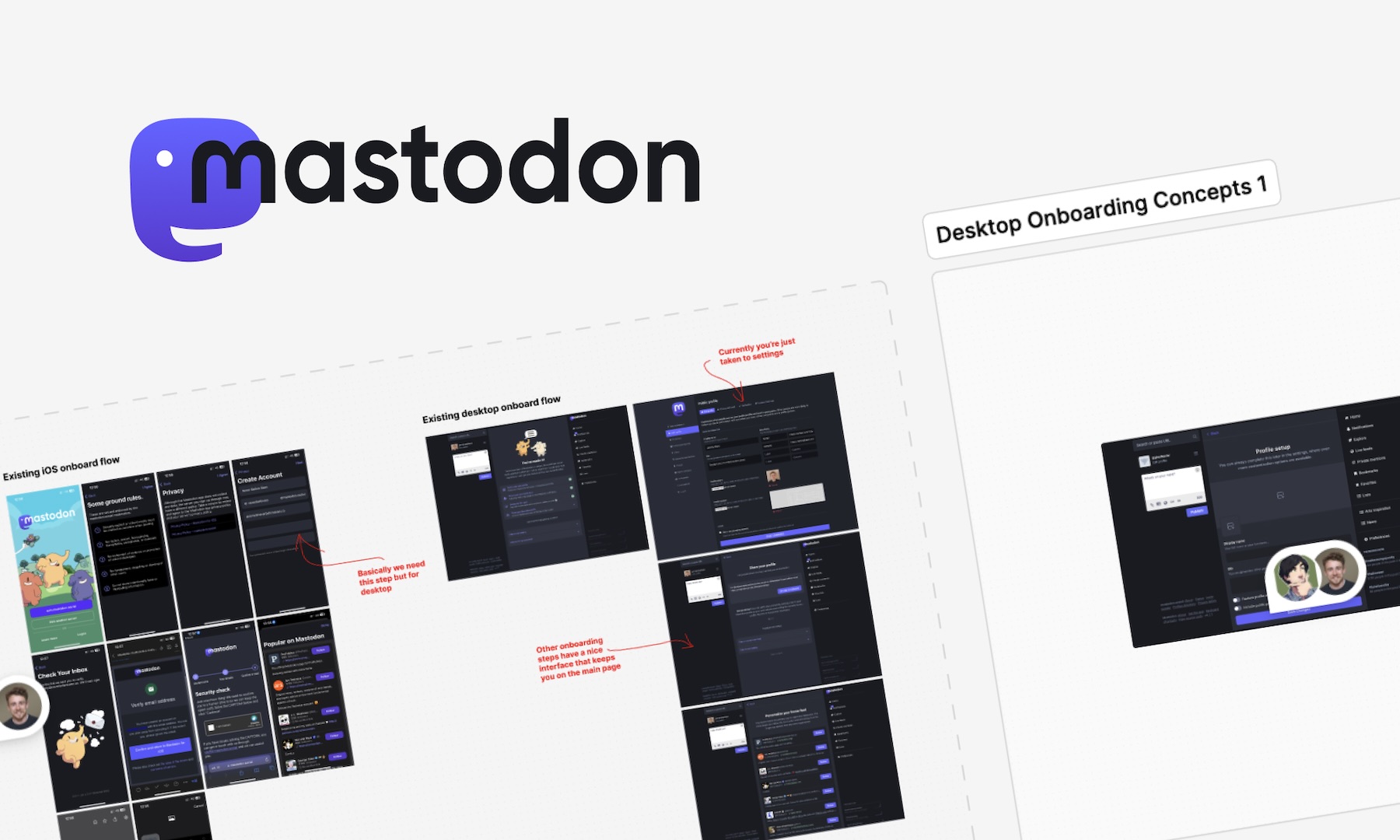
We helped Eugen Rochko, founder of Mastodon, fix their onboarding experience

Unlocking Airbnb’s Secret: How SaaS Founders Can Aim For 10 Stars And Win

How to avoid MVP feature creep: The ICE Method
Introducing Mast: The project tool for design teams

Reflecting on my time running a 100-person creative community in the heart of Melbourne
Starting a company during a global pandemic, with Jeremy Blaze on Funemployed

Introducing NOOK: Digital Patron Check-In & Menus to Keep Australia's Hospitality Industry Afloat
Why I’ve started a product design studio
Case Study: Making sense of LIVE carpark availability in UbiPark
Case Study: Embark’s design, launch & early iteration
Enpose has been acquired by ApiLayer, solidifying their position in the screenshot API market
An exercise in reductive design: Building a beautiful API